The Next Generation of Modern Korean Dining Doesn’t Live in Koreatown

For the last 15 years, Debbie Lee has been waiting for modern Korean cuisine to have its moment in the sun. Back in 2010, the veteran Korean American chef opened Ahn-Joo — an alternative romanization of anju, which translates to “drinking food” in Korean — first as a food truck, and later on as a short-lived kiosk inside Glendale’s Americana at Brand. At the time, she served Korean fried chicken, plus other inventive street food snacks such as bacon-wrapped rice cakes and Fuji apple egg rolls. “My vision back then was to open a Korean pub, but it was probably premature,” Lee says. “I tend to swing for the fences.”
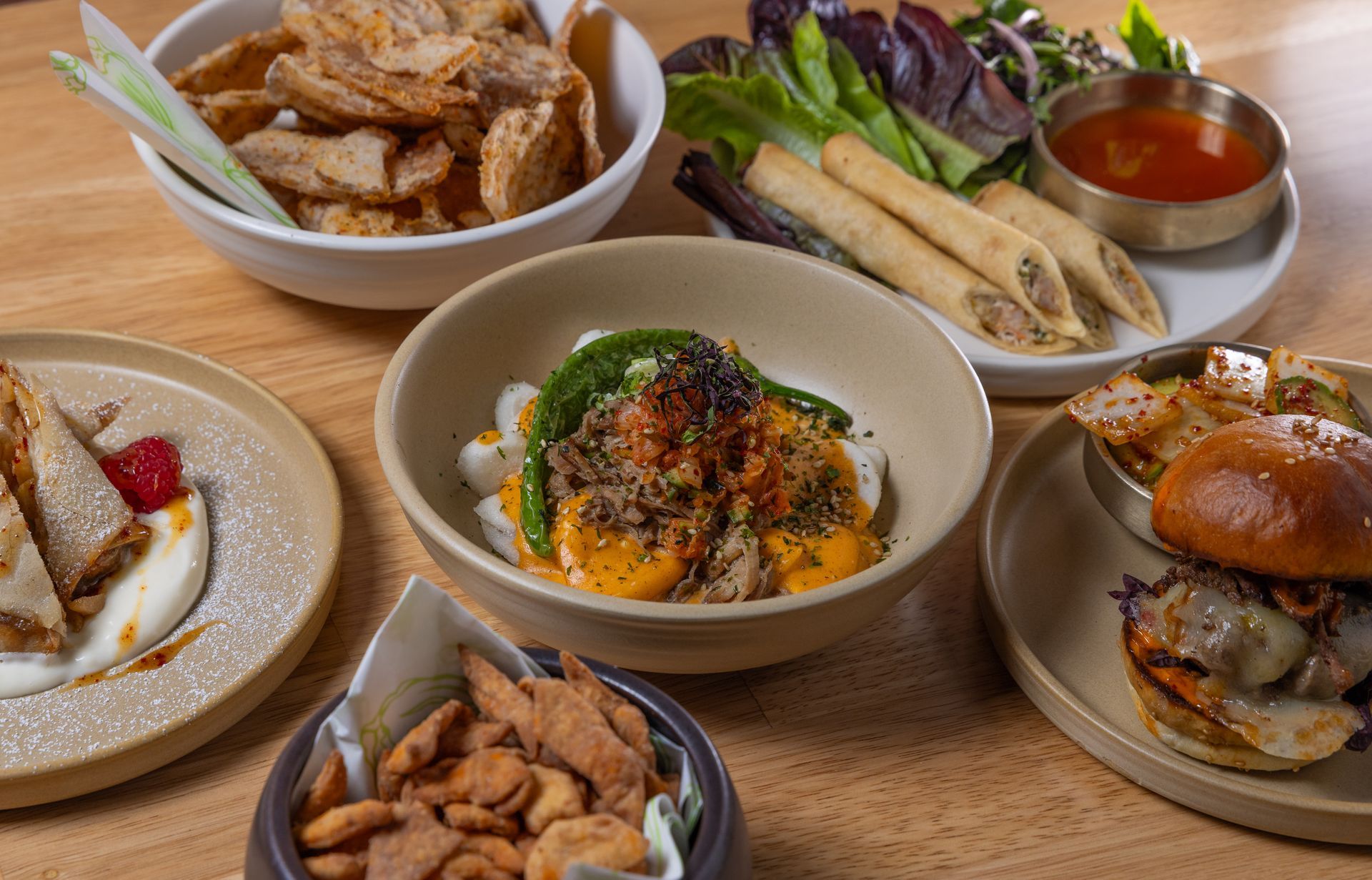
Last October, more than two years after it was first announced, Lee’s long-deferred dream became reality with the opening of Yi Cha, her pojangmacha-inspired gastropub in Highland Park. The casual, drinking-oriented restaurant marks a measured distillation of the chef’s cultural identity that has found an audience beyond Los Angeles’s Koreatown — and Lee’s not alone. Recent openings like Hojokban LA in the Arts District, Super Peach in Century City, and the Mulberry in Sawtelle Japantown have also ventured outside of Koreatown’s borders as they seek to upend diners’ conceptions of what contemporary Korean cuisine and hospitality can look, feel, and taste like. In all cases, this also includes plenty of cocktails, with some bar menus including variations of sool, the umbrella term for Korean rice-based spirits.
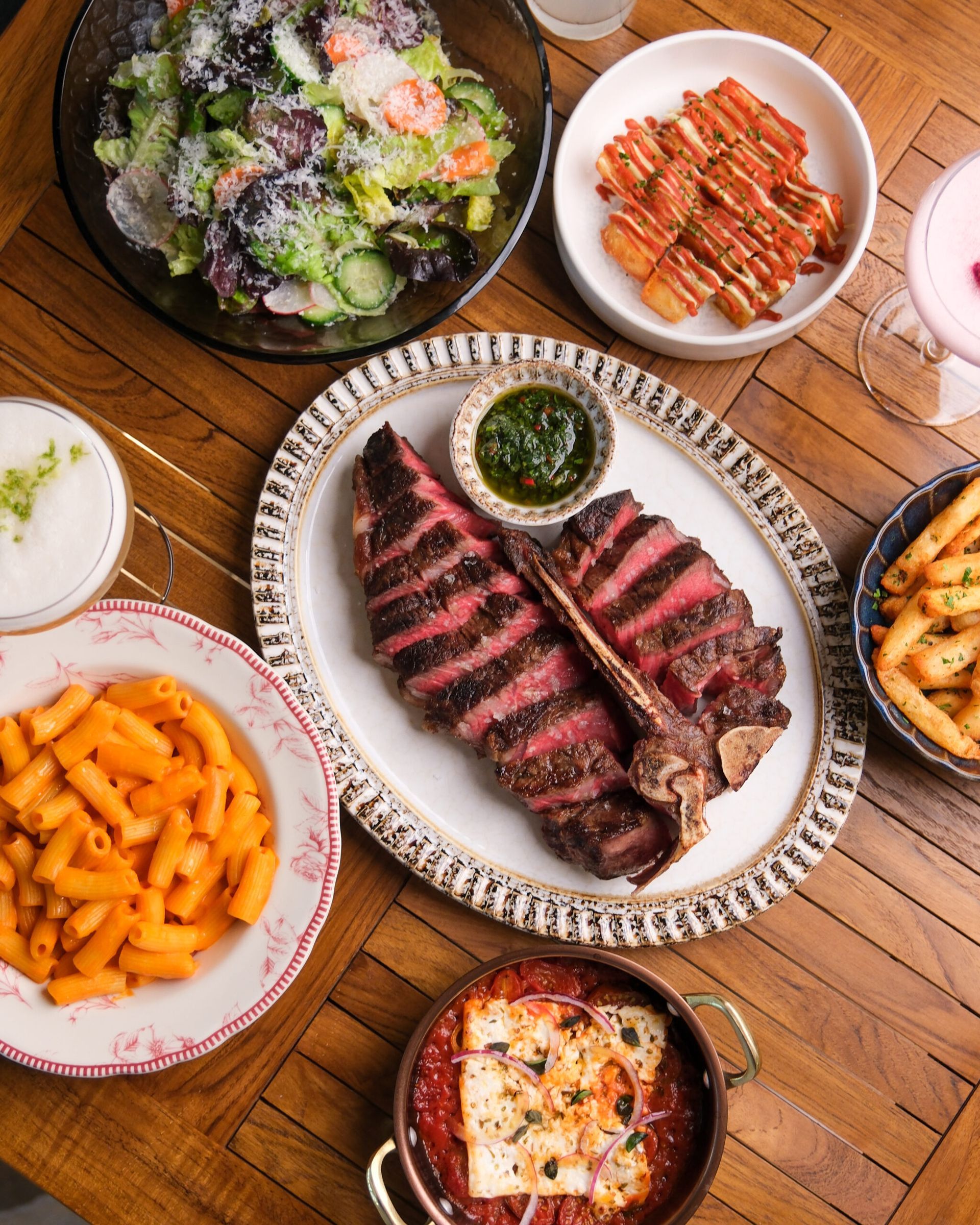
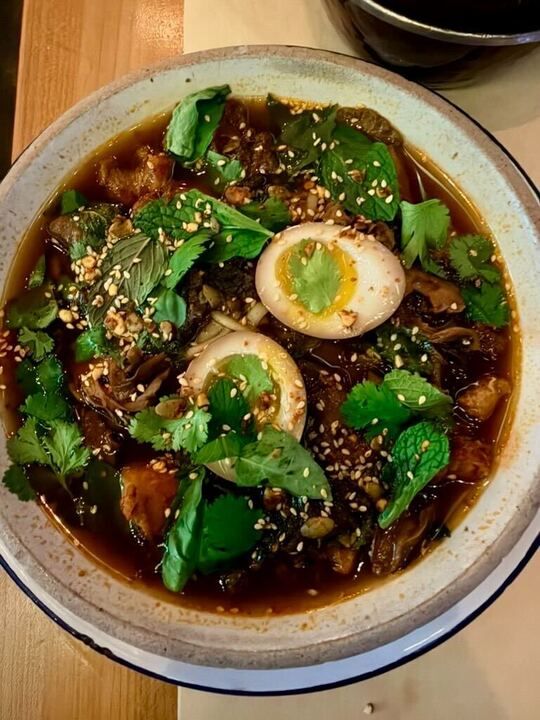
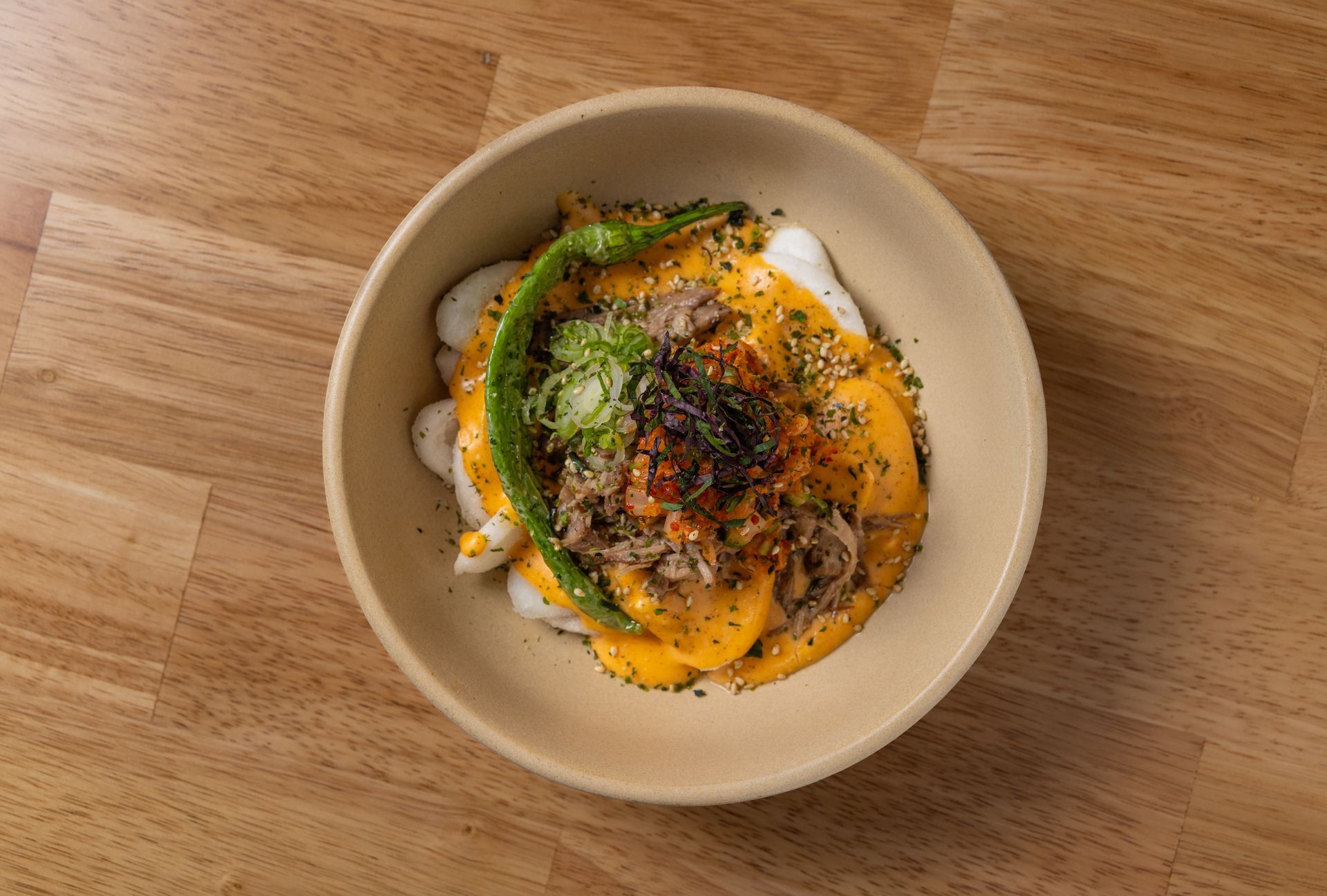
This new crop of Korean restaurants is blending time-honored cooking techniques with myriad influences and modern dining rooms to forge their own unique paths within Los Angeles’s Korean dining scene. The menus remain strongly rooted in the culinary traditions of Korea and its diaspora, whether that takes the form of the esquites-style corn cheese and crispy rice cake “nachos” served with ginger-braised pork at Yi Cha; Hojokban’s transformation of Nongshim Shin Ramyun into delightfully carb-loaded fried rice; the gimbap, or rice rolls, stuffed with wagyu beef and Chinook king salmon at Super Peach; or the Mulberry’s artfully constructed riff on eundaegu jorim, or braised black cod.
A little over a decade ago , the viral hit “Gangnam Style” and BTS had just entered the global consciousness. All of Los Angeles seemed enamored with the Korean and Mexican flavors of Roy Choi’s Kogi. Still, while staple dishes like bibimbap, galbi, and soondubu served at more old-school, immigrant-owned restaurants in Koreatown had been heralded by Jonathan Gold and other local tastemakers for years, a deeper awareness of South Korean foodways had yet to seep into mainstream U.S. culture. It wasn’t until 2016 that Matt Rodbard and Deuki Hong published Koreatown: A Cookbook and “gochujang” gained an official definition in the Oxford English Dictionary, with “doenjang” added by mid-2017. At the end of the decade, Serious Eats declared that Korean cuisine had made it big in America.
Since then, South Korea’s influence on global culture has grown exponentially. Following the critical and commercial success of Bong Joon-Ho’s Parasite and a rising interest in Korean beauty and skincare, a series of streaming hits like Squid Game, Single’s Inferno, and Culinary Class Wars have all but guaranteed the continued ascendance of hallyu, or wave of Korean pop culture.
In the Los Angeles restaurant scene, this growing recognition of and appreciation for all things South Korea has translated into greater receptiveness to Korean food outside of the Korean American community and, by extension, Koreatown. Despite changing demographics, the densely populated Central Los Angeles neighborhood remains the largest Koreatown in the United States and has served as the community’s cultural and economic homebase since the 1960s. Now, following in the footsteps of more upscale trailblazers like Baroo, Restaurant Ki, and Yangban, contemporary Korean dining destinations with a more casual feel and price point have taken root in other Los Angeles neighborhoods — and in some cases, like the Mulberry, become so popular it’s near impossible to book a table, even on weeknights.
“More and more, ingredients like doenjang and gochujang are becoming part of the standard lexicon for experienced diners,” says Einstein Park, the U.S. director of operations for GFFG, the Seoul-based hospitality group that operates Hojokban Los Angeles. This growing culinary familiarity has allowed Hojokban to build on traditional dishes that have been around for generations, if not centuries, without alienating a wider audience.
“We don’t like to pretend we’re creative geniuses,” he says; the menu is pointedly not chef-driven, nor does it claim credit for inventing any of its dishes. Instead, the culinary team draws inspiration from broader dining trends, including how everyday Koreans living around the world are experimenting in their home kitchens.
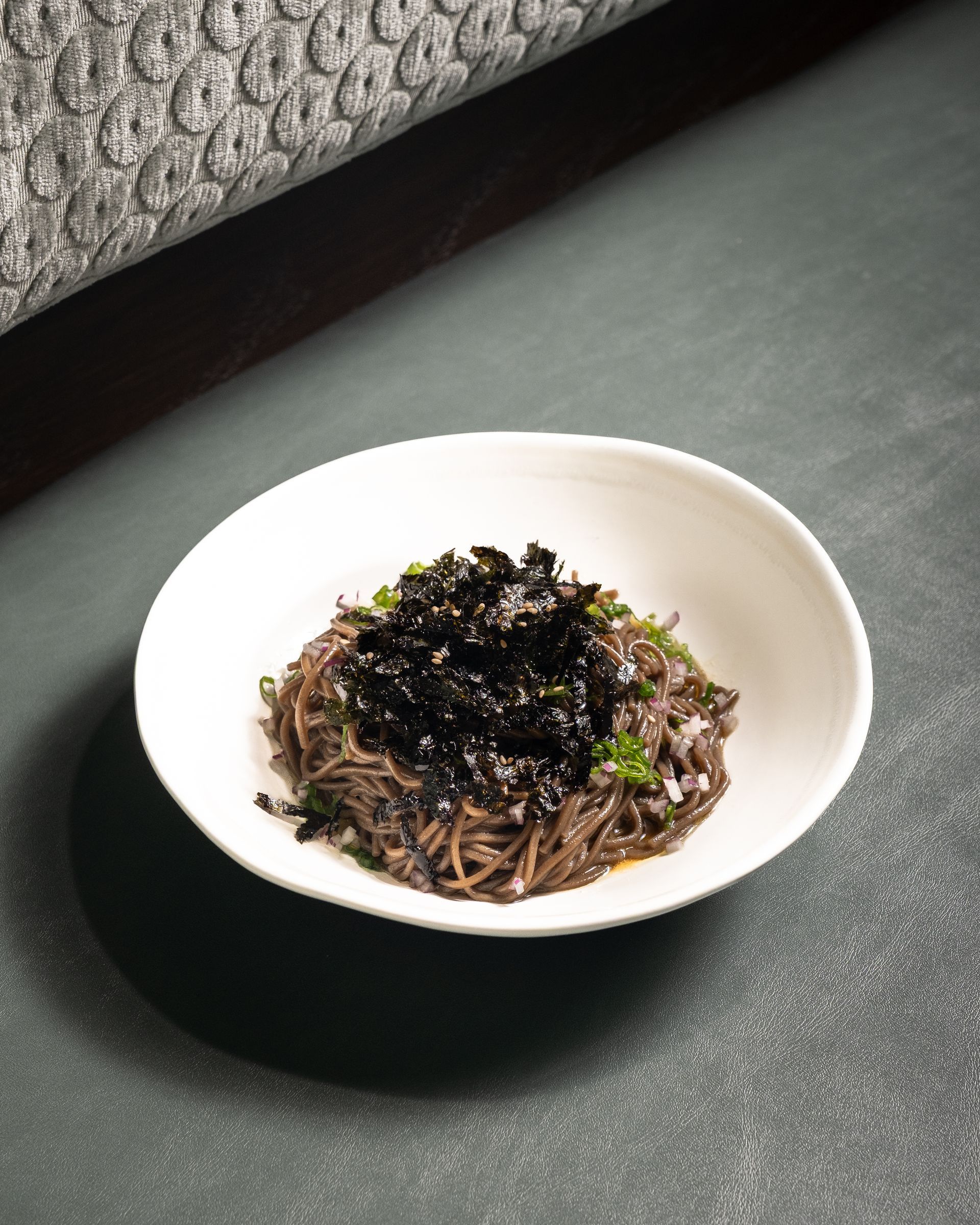
For example, his immigrant mother adds avocado to bibimbap. While that ingredient isn’t conventionally part of the mixed rice, meat, and vegetable dish, Park says it’s also not inauthentic to what Korean cooking looks like in the U.S. today. The same willingness to tweak and experiment manifests at Hojokban LA, which largely serves the same dishes as the outpost in New York City and the flagship location in Seoul. Much of the menu at the Arts District restaurant derives its inspiration from GFFG CEO Joon Lee’s mother-in-law. Though buckwheat noodles in perilla oil have been part of the Korean cuisine canon for centuries, the version at Hojokban adds jalapeño peppers, garlic, and other dressing components that Park says aren’t “entirely traditional, but [also] not far off.”
Park joined GFFG after he had become a fan of the OG Hojokban over the course of several trips to South Korea. In Seoul, both locals and visitors like Park gravitated toward the trendy, nostalgic interior design — “like grandma’s house, but clean” — and familiar dishes updated with a clearly discernible modern twist.
“There are so many Italian restaurants that thrive in the Arts District and nobody asks them, ‘Why are you outside of the Italian community?’”
Einstein Park
From his perspective, ingredient additions such as “snowflake” cheese to gamja jeon (deep-fried potato pancake) represent a gradual evolution in the cuisine. The dishes served at Hojokban LA represent how dining is evolving in South Korea right now, Park says: “We’re not taking two cuisines and forcing it.” In Koreatown, the addition of cheese atop meat dishes has long been present at more old-school restaurants like Sun Nong Dan and Mapo Galbi, which happily top galbi-jjim and dak-galbi, respectively, with small mountains of shredded mozzarella.
Seven miles away in Highland Park , Lee’s more hybrid Korean American background emerges at Yi Cha in dishes like mandu lumpia, which she developed with her Filipino American chef de cuisine, and the inclusion of jangjorim in the restaurant’s one-of-everything anju platter. (While Lee uses her grandmother’s recipe for North Korean-style soy-braised beef jerky, it has not historically been considered a drinking food.) The menu’s sashimi chopped salad represents her spin on a classic hwedupbap: “If I was to make a salad, I’d want some protein, gochujang vinaigrette, and nurungji [scorched rice] croutons,” she says. Among Korean American guests, the salad induces a sly smile and a chuckle: the flavors are nostalgic but the salad’s lightness, plus the inclusion of fruit, translates into a dish that feels less familiar yet still comforting.
That same playful tension is evident on the Westside at Century City’s Super Peach and the Mulberry on Sawtelle Boulevard, where each restaurant’s menu reflects the liminal space between the operators’ Korean and American identities. “Even the dishes that aren’t straight-up Korean have some way of tying into that sort of eating and cooking,” says Jude Parra-Sickels, the Momofuku regional executive chef who oversees menu development at Super Peach.
The restaurant’s steaks, for example, turn the traditional process of making galbi on its head. Rather than using a marinade beforehand, the kitchen brushes a sweet soy glaze onto the steaks throughout the cooking process in the same way American steakhouses use seasoning rubs and compound butters. Of course, the most overtly Korean part of the menu are the gimbap. All four versions — which include fried chicken and “really spicy” bluefin tuna — have become extremely popular with guests, many of whom drop by after a movie or a morning of errands and shopping.
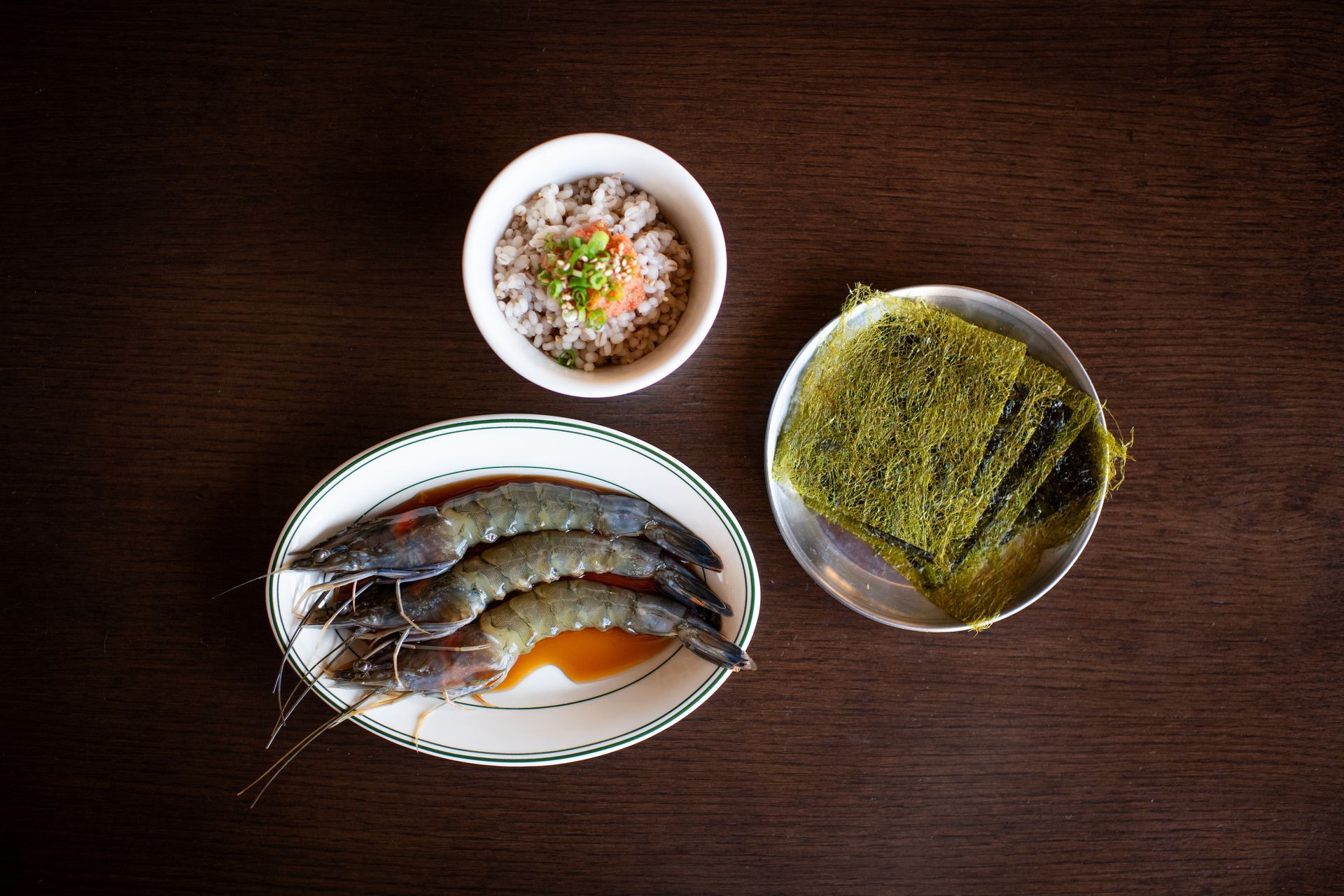
For Jennifer Chon and David Lee , the married co-owners of the Mulberry, the culinary duality of their casual West Los Angeles bistro feels like a natural extension of their identities as Korean Americans. During menu development, the couple worked hand in hand with fine dining alum Curtis Park, who previously worked at San Francisco’s Benu and Commis in Oakland, plus a brief tenure at Lincoln Carson’s Bar Lis in Hollywood. When pressed, the couple bristle at the term “fusion,” which they feel doesn’t adequately capture their intentions with the menu at the Mulberry. At the restaurant, a mixed lettuce and chicory Caesar salad topped with puffed rice lives alongside a starter of roe-topped, soy-marinated blue prawns served with barley rice and dried seaweed.
Of course, these aren’t the first places in Los Angeles to ever offer a modern interpretation of Korean cuisine, nor will they be the last. In 2021, the now-closed Tokki in Koreatown’s Chapman Plaza dazzled diners with its rosé tteokbokki, a now commonplace dish across South Korea; its slightly more upmarket replacement, Danbi, does the same with a luxurious take on bibimbap crowned with uni and soy-marinated shrimp. A block away, Jilli offers a tightly curated, carb-heavy bill of fare to accompany a larger menu of sool, wine, and beer. What distinguishes these restaurants from previous ones, however, is the fact they have opened outside of Koreatown for one reason or another — and that they’re finding success, even early on, with a diverse array of diners, not just Korean Americans.
“We really wanted to not be in Koreatown for a purpose,” Lee says, of why she chose to open Yi Cha in Highland Park. “We want others to embrace the food, the integrity, and the inspiration for the culture.” In the case of the Mulberry, Chon and her husband say that they opted for a space in Sawtelle Japantown because of its proximity to Pacific Palisades, where they lost their home to wildfire last year. Many of their displaced friends and family have since relocated to West Los Angeles, and they wanted to be nearby.
For GFFG, the group behind Hojokban LA, the choice to open in the Arts District had also been driven by practical concerns. “With Koreatown, there’s already so many Korean dining options out there,” Park says. “Since we’re not a traditional option, we felt it might draw some unfair comparisons.”
A big part of why so many Korean restaurants have thrived in Koreatown, he explains, is because of the large immigrant population, who serve as the most consistent and reliable source of business. When other people visit, it’s just the cherry on top, financially speaking. Conversely, if a Korean restaurant opens elsewhere and is able to succeed outside of that community, that’s indicative of a wider audience becoming more receptive to Korean cuisine.
At the end of the day, Park says that Hojokban LA just wants to be a successful restaurant, period — like its neighbors Baroo and Bestia. “There are so many Italian restaurants that thrive in the Arts District and nobody asks them, ‘Why are you outside of the Italian community?’”
Ready to work with BigFork Media Marketing?
Let's connect! We’re here to help.
Send us a message and we’ll be in touch.
Or give us a call today at (323) 553-5103
Agency Contact Form
More Marketing Tips, Tricks & Tools